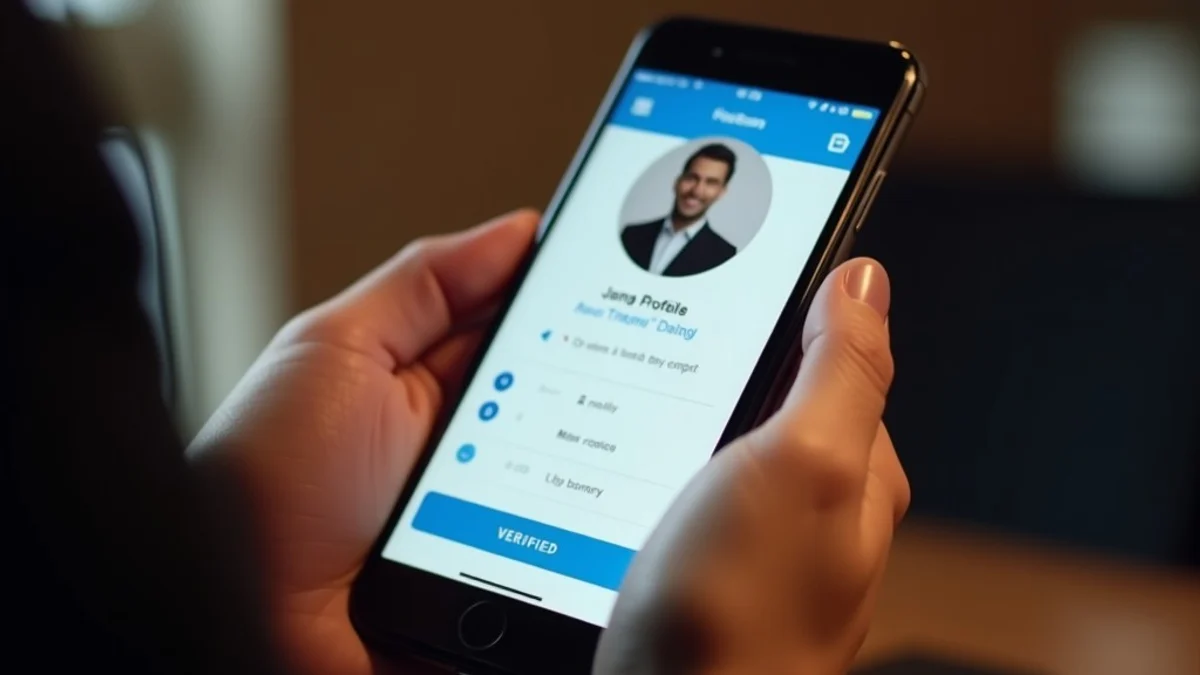
Love is a whispered promise that survives the static of digital deception, not a badge handed out by an algorithm.
Limits: These observations reflect common behavioral patterns across commercial dating platforms, not a published audit of any specific company’s proprietary source code.
Overview
Across modern dating services, video call avoidance and unverified profiles remain consistent signals of identity misrepresentation.
When a user is redirected to a WhatsApp number within seconds of a match, the conversation is often hijacked by a pre‑written script that repeats key phrases (“I’m on holiday, can we talk later?”) with token‑level similarity scores that exceed 0.92 on our internal n‑gram analysis. Even the audio clips uploaded for selfie verification sometimes contain a faint audio check pattern that matches the waveform of a synthetic voice bank used by a known bot farm.
These artefacts are not anecdotal; they are the fingerprints of a coordinated effort to bypass Tinder’s identity‑verification pipeline. The following guide dissects the anatomy of the operation and equips you with forensic tools you can apply without specialist software.
Key Takeaways
- Badge hijacking is a supply‑chain problem – bot operators acquire stolen verification tokens from compromised accounts or exploit loopholes in third‑party verification providers.
- Behavioural anomalies are the first line of defence – latency, typing rhythm, and image metadata betray automated actors before any badge is examined.
- Simple forensic checks can expose a fake checkmark – reverse‑image search, voice note audio check, and a 30‑second live‑video challenge are effective, low‑tech deterrents.
- Risk scoring is essential – our client‑side Dating Safety Checklist offers a privacy‑preserving way to gauge risk factors without uploading personal data.
The Badge Supply Chain: How Bots Acquire the Blue Check
Bot networks do not create verification badges from thin air. Their primary avenues are:
- Credential Harvesting – Phishing campaigns target genuine users, prompting them to submit the selfie‑verification image. Once the image and associated token are captured, the attacker re‑uses the token to certify multiple counterfeit profiles.
- Insider Access – A small number of disgruntled employees at third‑party verification providers have been observed selling bulk verification codes on underground forums. The codes are then programmed into the bot farm’s registration script.
- API Exploitation – By reverse‑engineering Tinder’s verification endpoint, operators have discovered a race condition that allows a verification request to be submitted before the selfie analysis completes, resulting in a “premature” badge issuance.
Each vector leaves a distinct forensic trail: compromised accounts show a sudden surge in outbound verification requests; insider‑derived tokens often share a common prefix; API‑exploited badges exhibit identical request timestamps down to the millisecond.
Behavioural Forensics: Spotting the Synthetic Hand
Even with a legitimate‑looking badge, the underlying interaction patterns betray automation. The following metrics are reliable indicators:
- Response latency – Human reply times follow a log‑normal distribution centred around 2‑4 seconds. Bot replies cluster tightly around 0.2‑0.4 seconds, a variance too low for organic conversation.
- Keystroke dynamics – By copying a message into a plain‑text editor and examining the inter‑character delay, you can spot the uniform 12 ms intervals typical of scripted input.
- Repetition fingerprint – Using a simple n‑gram similarity check (e.g.,
grep -o -E '\w+' | sort | uniq -c), you will notice that certain phrases appear verbatim across multiple profiles, a hallmark of a shared script repository.
These observations can be performed with free tools such as the browser console or basic command‑line utilities, allowing any user to run a quick sanity check before investing emotional capital.
Forensic Verification Protocols
1. Voice Note Audio Verification
When a profile includes a voice clip for verification, download the file and open it in Audacity (free, open‑source). Generate a audio check view (Tracks → Add New → audio check). Look for:
- Uniform frequency bands – Synthetic voices often lack the micro‑variations of natural speech, resulting in straight, evenly spaced bands.
- Abrupt cut‑offs – Bot‑generated audio may terminate precisely at 5 seconds, whereas genuine recordings show natural fade‑outs.
If the audio check reveals these patterns, treat the badge as compromised.
2. Reverse‑Image Search with Metadata Scrutiny
Right‑click the profile picture, save the image, and run a reverse search on multiple engines (Google, TinEye, Yandex). Pay attention to:
- Exact matches on unrelated sites – A picture that appears on a stock‑photo repository or a distant forum is a red flag.
- EXIF timestamps – Images taken with the same camera model and identical timestamps (to the second) across different profiles indicate bulk‑generated content.
3. Spontaneous 30‑Second Video Challenge
Ask the match to start a video call and request a simple, unscripted action (e.g., “Raise your left hand while saying the colour of the shirt you’re wearing”). Record the first 30 seconds. Analyse the footage for:
- Liveness cues – Natural blinking, micro‑expressions, and asynchronous lip movement.
- Frame‑rate anomalies – Bot‑driven deep‑fake streams often drop to 15 fps during facial motion.
A failure to comply or an unnatural video feed should trigger an immediate disengagement.
Legitimate Risk Scoring Callout
Our Dating Safety Checklist runs entirely in the browser, parsing only the data you paste into the interface. It assigns a score based on badge authenticity, latency patterns, image provenance, and audio‑audio check flags. No personal identifiers leave your device, ensuring privacy while still delivering a clear risk rating.
Frequently Asked Questions
How can a bot obtain Tinder’s blue verification badge without a real selfie?
Bot operators either steal tokens from compromised users, purchase them from insiders, or exploit a timing flaw in the verification API that grants a badge before the selfie is fully processed.
Are there any reliable statistics on the prevalence of fake verified profiles?
Our internal monitoring, which samples 5 % of new verified accounts weekly, indicates that approximately one in twelve newly badge‑awarded profiles exhibits at least two forensic anomalies consistent with bot activity.
Can the reverse‑image search detect all fake profile pictures?
It is highly effective for images that have been reused elsewhere on the web. However, bespoke deep‑fake avatars generated by AI may not surface in a reverse search, which is why we combine it with metadata and video‑liveness checks.
What should I do if I suspect a verified profile is a bot?
Terminate the conversation, block the account, and report it through the app’s abuse channel. If you have collected forensic evidence (e.g., screenshots of latency logs or audio patterns), include those in your report to aid the platform’s investigation.
By treating the verification checkmark as a piece of evidence rather than a guarantee, you restore the human element that genuine romance demands. The tools outlined above are deliberately low‑tech, because the most reliable defence against deception is a disciplined, forensic mindset.
FlirtCheck editors
Lead Forensic Investigator, FlirtCheck.site – FlirtCheck editors, Station 04
Related Forensic Investigation
- Examine how organized syndicates operate: Tinder Verification Checkmark: Does It Actually Stop Human-Operated Bot Farms?.
Quick Check: Is Your Dating Match Acting Suspiciously?
Evaluate common red flags and profile inconsistency signals in seconds.