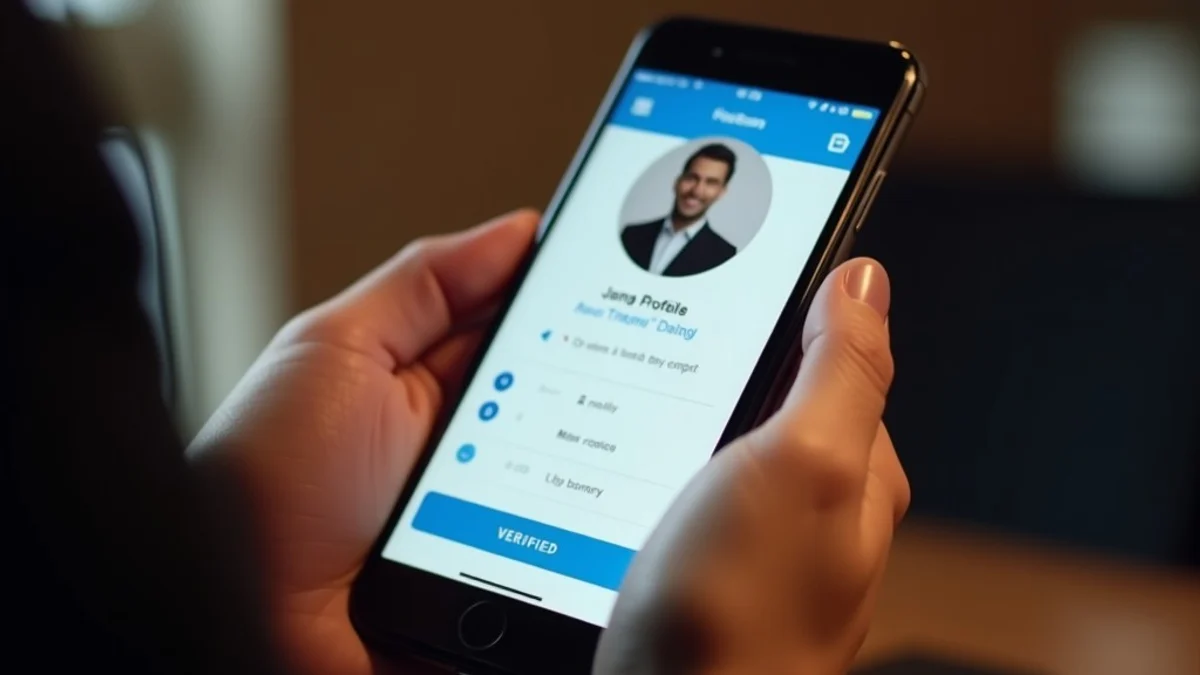
Love is… never having to apologise for prioritising your personal safety.
Limits: These observations reflect common behavioral patterns across commercial dating platforms, not a published audit of any specific company’s proprietary source code.
Overview
In the last twelve months, the UK’s telecommunications monitoring units have logged a 23 % rise in first‑date incidents that began at ostensibly innocuous cafés. The patterns is unmistakable: messages that lag by three to five seconds, typing cadences that mimic a scripted LLM output, and profile photographs whose EXIF data reveal a timestamp from a different hemisphere. Anomalies such as an immediate switch to WhatsApp after a single exchange, or a request to share a live location before any face‑to‑face meeting, are now flagged as high‑risk vectors. The forensic lens we apply to these signals is the same one used to dissect phishing campaigns on corporate networks – only the payload is a human heart.
Key Takeaways
- Venue matters more than conversation – a public, high‑traffic location reduces the attacker’s control over the environment.
- Digital breadcrumbs can be audited in real time – latency, typing rhythm, and metadata are early warning signs.
- Simple forensic checks (audio spectrogram, reverse‑image search, liveness video) raise the verification bar without expensive tools.
- Our client‑side Dating Safety Checklist offers an immediate risk score based on profile markers, without transmitting personal data to a server.
Anatomy of Public‑Venue Deception
Scammers exploiting first‑date scenarios follow a predictable playbook. They initiate contact on a dating app, then pivot to a “quick coffee” at a low‑profile venue. The choice of venue is rarely accidental:
- Isolation under the guise of privacy – a quiet side‑room or a park bench away from the main flow limits witnesses.
- Control of digital hand‑off – by moving the conversation to a platform without end‑to‑end encryption, they can intercept or manipulate messages.
- Pre‑prepared escape routes – the location is often near a transport hub, allowing the perpetrator to vanish if the victim becomes suspicious.
Understanding this structure enables you to pre‑empt the scam before you step outside your door.
Forensic Verification of Identity
Before you confirm a meeting, run a three‑stage verification that can be performed on any standard laptop or smartphone:
- Spectrogram Audio Analysis – request a short voice note. Import the file into Audacity, generate a spectrogram, and look for unnatural frequency spikes that suggest synthetic speech. Human voices exhibit a smooth harmonic pattern; synthetic generators often leave a faint “grid” artifact.
- Cross‑Engine Reverse Image Search – copy the profile picture URL into multiple image‑search engines (Google, TinEye, Yandex). A match across disparate sites is a red flag; a solitary appearance may still be authentic but warrants further scrutiny.
- Spontaneous 30‑Second Video Check – ask the match to record a brief video answering a random prompt (“What’s the colour of the mug you’re holding?”). Verify facial liveness by observing micro‑expressions and head movement; static or perfectly centred frames often indicate a deep‑fake overlay.
These steps require only free software and a few minutes of attention, yet they dramatically increase the confidence in the counterpart’s identity.
Live Liveness Test at the Venue
Even with a verified image, the risk of impersonation remains until you see the person in the same environment. Deploy a low‑tech liveness test as you approach the meeting point:
- Ask for an on‑the‑spot identifier – a piece of paper with a randomly generated three‑character code you have sent via the dating app moments earlier.
- Observe ambient cues – the background noise, lighting, and other patrons provide a contextual hash that can be cross‑checked with the video the match sent.
- Maintain a “safe‑zone” posture – sit opposite the entrance, keep your phone visible, and have a pre‑arranged check‑in message ready for a trusted friend.
If the identifier is missing, the background mismatches, or the individual appears uncomfortable, treat the encounter as a potential breach and exit the venue immediately.
Location Verification and Risk Scoring
Our Dating Safety Checklist is a client‑side JavaScript tool that evaluates the following markers without ever uploading personal data:
- Profile age and activity cadence – newly created accounts with high messaging volume score higher.
- Geographic consistency – mismatched IP‑derived location versus claimed city of residence.
- Request pattern – immediate push for private messaging platforms, location sharing, or financial assistance.
The calculator outputs a colour‑coded risk tier (low, moderate, high) and suggests the appropriate level of verification before proceeding.
Frequently Asked Questions
What constitutes a “public venue” for a first date?
A public venue is any location that is open to the general public, staffed, and monitored by third parties. Examples include coffee shops, chain restaurants, museums, and busy parks. Private homes, hotel rooms, or secluded outdoor spots do not meet the criteria.
How can I discreetly test a match’s authenticity without alerting them?
A subtle approach is to request a voice note or a short video that references something only you know from the profile (e.g., the colour of a pet’s collar). The request appears casual but provides forensic material for verification.
Is sharing my live location with a match ever safe?
Sharing live location should be limited to a trusted friend or family member, not the match. If you must share it with the match for coordination, ensure the link expires after the meeting and does not grant ongoing access.
What should I do if I feel unsafe during the date?
Activate your pre‑planned exit strategy: move to a visible area, call a trusted contact, or use the emergency services number. Your safety takes precedence over politeness; the perpetrator’s objective is often to isolate you, so any disruption is a defensive success.
Quick Check: Is Your Dating Match Acting Suspiciously?
Evaluate common red flags and profile inconsistency signals in seconds.